Unreviewed content going live on a bank's website is an operational and regulatory risk. A rate error, an outdated disclosure, or a misconfigured loan form can draw examiner scrutiny and erode customer trust. SiteViz Banking gives administrators precise, role-based control over every user's access and includes a built-in approval workflow so nothing publishes without a human sign-off.
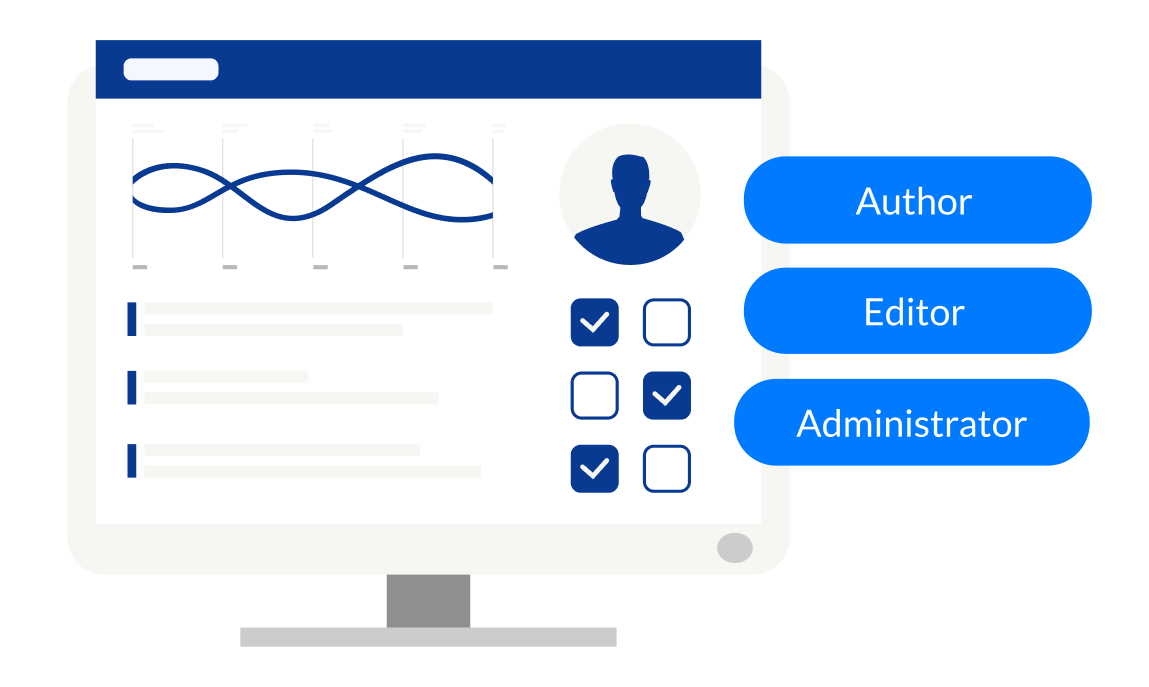
Administrators can create an unlimited number of permission groups and assign staff accordingly. A branch manager updating location hours, a loan officer submitting a rate change, and a marketing coordinator drafting a press release each operate within their own defined scope. None of them require access to sections of the site outside their role.
At the module level, administrators control which permission groups can create, view, update, and delete content. A user who manages job postings has no access to the rates module. A staff member who writes FAQs cannot modify static pages. Scoping access to what each role actually requires reduces the risk of unintended changes and keeps the administrative interface straightforward for non-technical staff.
Users assigned editor access can write and update content. Their changes are saved as drafts and do not go live. Only users with author-level access can review those drafts and approve them for publication. This applies to both static pages and dynamic modules. A revised loan rate, a new FAQ entry, or an updated staff profile submitted by an editor sits in a pending state until an author activates it.
For institutions operating under PCI, SOC 2, and WCAG compliance requirements, this two-tier workflow provides a documented, repeatable process for content governance. Every change passes through a defined approval step before it reaches your customers.
Every user sees only what their permission group allows. This limits exposure to sensitive areas of the site and gives administrators a clear picture of who can access what. When a change is made, it is traceable. You know which group had access and who within that group made the update.
For institutions that undergo internal audits or regulatory examinations, a structured content approval process with defined access controls is a defensible position. SiteViz Banking's permissions system is built to support that standard of governance as a core platform capability, not a plugin or a workaround.
Yes. Permissions are configured at both the module level and the static page level. You can give a user group access to manage job postings while restricting them from editing the rates page or any other section of the site.
The change is saved as a draft and does not publish. An author must review and approve the draft before it goes live. This applies to static page edits and new content submitted through dynamic modules.
There is no limit. Administrators can create as many permission groups as the organisation requires and assign staff to multiple groups where appropriate.
Your institution's website is a regulated customer-facing channel. See how SiteViz Banking handles access control and content approval in a 30-minute demo.
Keep up-to-date with the latest in the industry so your business can stay ahead of the game.